
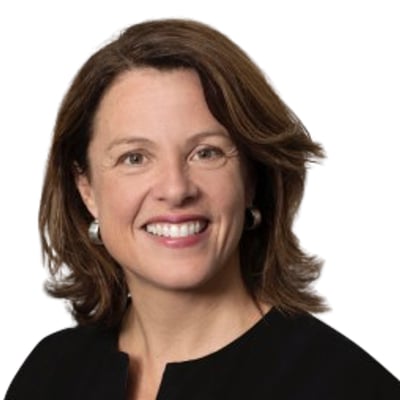
Prof. Kate Brooks
Head, School of Electrical Engineering, Computing and Mathematical Sciences
Curtin University
Kate is the Head of School for Curtin University School of Electrical Engineering, Computing and Mathematical Sciences (EECMS).
Kate is an expert in scoping and delivering projects of strategic importance to business, government and universities. Kate values building relationships and networks and has a keen eye for connecting interesting people to start conversations that generate new ideas. She is also passionate about STEM and skilling up Australia’s workforce for a digital and sustainable world and has a keen eye for what's on the horizon in terms of new opportunities and challenges.
Kate has PhD in astrophysics and spent the first part of her research career in Chile working for the European Southern Observatory and then the University of Chile before moving to Sydney to accept the CSIRO Bolton Research Fellowship. Kate was elected President of the Astronomical Society of Australia for 2011, 2012 and was awarded the CSIRO Chairman's Medal in 2015 for her contribution to Australia's involvement with the SKA telescope.
Kate's career roles include State Director for the WA Life Sciences Innovation Hub (a collaboration between federal and state governments); Lead Advisor Research for Murdoch University, Innovation Manager for Wesfarmers (WESCEF); and Deputy Head of Operations for CSIRO Astronomy and Space Science. In her most recent role with the Federal Government's Entrepreneurs' Programme, Kate led the design and implementation of a program to helpl 150 businesses across Australia to decarbonise.
Kate also holds a Grad Cert in Innovation & Commercialisation and is a member of several Advisory Boards for universities and not-for-profit organisations. Kate co-founded Green Caffeen, a sustainably coffee cup startup on the eastcoast and was a member of the Board of Directors for StartupWA. Kate has also lectured for Murdoch University's MBA Global program on innovation and commercialisation.
Speaking at
-
1:30–2:45pmTue 24 MarPublic-Private RoundtablesUniClub - Roundtable Room 2Open
Securing the Future
[Roundtable] Wiring the Indo-Pacific - Why Western Australia is the Place for Green Compute Infrastructure at Scale
-
 Angela TrevithickExecutive Director, Manufacturing & Supply Chains DevelopmentDepartment of Energy & Economic Diversification
-
 Brett LooneyPrincipal Solutions ArchitectAWS
-
 Prof. Kate BrooksHead, School of Electrical Engineering, Computing and Mathematical SciencesCurtin University
-
 Margarita KongawoinSenior Vice President of Software & HPCDUG Technology
-
 Matthew MeszarosFounder and Chief Executive OfficerProject Ohm
-
 Nils HayChief Executive OfficerMid West Development Commission
-
 Jason McFarlaneDirectorWestern Australian GreenTech Innovation HubModerator
About this session
Against a backdrop of rising geopolitical and geo-economic uncertainty, the Indo-Pacific’s fast-growing digital economies are looking for infrastructure that can deliver both cost efficiency and ESG-aligned resilience.
In this context, Western Australia is drawing increasing interest for the foundations that matter: clean and reliable energy, critical minerals for high-performance chips, global connectivity, secure and scalable compute, lower operating costs for business, and a stable, trusted operating environment.
This session will explore how WA can convert these advantages into long-term strategic value for the state and international markets: offering internationally competitive services while supporting local industries and SMEs, creating future jobs, attracting investment, strengthening sustainable development, and positioning the state as a trusted hub in the region for next-generation digital infrastructure. It will also examine how public and private sectors and academia can work together to unlock this opportunity and ensure the benefits build a stronger regional economy.
-

